Annual Party & Membership Meeting, Dec. 2 at Varsity Club
See the event page here: https://kcrta.org/event/2026-annual-party-membership-meeting/

See the event page here: https://kcrta.org/event/2026-annual-party-membership-meeting/
Topline
The Mid-America Regional Council (MARC) is responsible for leading the regional transportation planning for the bi-state Kansas City metro. One of the ways that they have done that is through their Smart Moves Plan.
As MARC explains, the Smart Moves Plan is meant to serve as the long-range transit plan for the region. More specifically, the plan:
You can learn more about the plan by clicking here. The project website has plenty of good information about the plan and insights based on their research. They have also released a survey where they’re asking people for their insights on how they experience transit today.
There’s plenty to be excited about with the updated plan, but there’s a lot to take in and digest. That’s why MARC is organizing a series of public meetings to share details with everyday folks and get feedback on how to make the final version of the update even better.
Plan to attend one of the four scheduled meetings across the region:
Wyandotte County Open House
Tuesday, November 3, 2026
4:30 – 6:30pm
West Wyandotte Library
1737 N. 82nd Street [map] [Route 116]
Kansas City, KS 66112
Johnson County Open House
Thursday, November 5, 2026
4:30 – 6:30pm
Central Resource Library
9875 W. 87th Street [map] [Route 487]
Overland Park, KS 66212
Northland Open House
Monday, November 9, 2026
4:30 – 6:30pm
Mid-Continent Public Library
8700 N. Oak Trafficway [map] [Route 201]
Kansas City, MO 64155
Jackson County Open House
Monday, November 16, 2026
4:30 – 6:30pm
Plaza Library
4801 Main Street [map] [KC Streetcar | Route 35 | Route 47 | Route 50 | Route 401]
Kansas City, MO 64112
The Smart Moves Plan is a key document to guide our efforts to create a strong and reliable system for regional transit. In order to take the plan from the paper to the pavement, the KCRTA needs YOU to learn more about the plan and make your voice heard on how this document should be shaped and finalized.
First, a big thank you! The number of riders, advocates, employers, and community members who reached out to legislators this past session on the importance of transit investment was exceptional. Because of your voices, Missouri transit funding held on to $4.2 million — a decrease from prior years, but not the $0 that was on the table. That result was not guaranteed. It happened because people showed up and spoke up.
Now, it’s time to do it again.
While the next legislative session is still months away, the real work on the state budget begins much sooner. In October, Governor Mike Kehoe’s administration starts building the budget proposal that will be unveiled in January. This is the moment when transit riders, advocates, employers, community organizations, and other stakeholders can shape the conversation before it ever reaches the legislature.
In August, the Missouri Highway and Transportation Commission approved MoDOT’s SFY 2028 State Transit Assistance request, totaling $9 million:
This request comes after two years of significant decline in state investment in public transit, driven by broader state budget challenges. The MPTA has sent a letter to the Governor’s office outlining why restoring this funding matters — but administration officials need to hear directly from the people and communities transit serves.
Contact the Governor’s Office
Reach out to Governor Kehoe’s office and share why transit investment matters in your community. Specific, personal stories make the strongest case — how transit gets you to work, to medical appointments, to school, or keeps your business staffed and your community connected.
Write Your Local Paper
A letter to the editor in our local media is a powerful, public way to make the case for state transit investment — and it reaches both the public and policymakers.
Spread the Word
Share this post with peers, colleagues, riders, and other stakeholders. The more voices weighing in now, before the Governor’s budget is finalized, the stronger the case for transit funding in January.
For questions or to get more involved, contact the Kansas City Regional Transit Alliance.
The Jackson County Legislature is considering a dedicated sales tax for public transportation and has scheduled listening sessions throughout the County in July to hear thoughts and ideas from residents on “the future of regional transit in Jackson County.”
Jackson County provides no transit service today. Previous efforts to secure funding for a regional rail proposal disintegrated after KCRTA led an education campaign (“Transit Works For Us”) leading up to a potential sales tax vote in 2012, for which the County acquired a 17.7-mile segment of railroad right-of-way that eventually became the Rock Island Trail.
Our July 2025 poll indicated a majority support for a 1/2-cent dedicated sales tax for bus transit.
KCUR: Jackson County could vote on transit tax to help fund buses. Residents can weigh in now

KCRTA will participate in a panel discussion on transit funding. The session will also include background on how transit is funded today and the results of recent survey work conducted by Mid-America Regional Council.
https://www.marc.org/event/transit-funding-101

Two more local governments — the City of Independence and the Unified Government of KCK/Wyandotte County — are slashing bus service due to rising costs and the lack of a dedicated funding mechanism.
Both governments fund transit from general revenue.
Independence: https://www.kshb.com/news/local-news/independence-to-suspend-bus-services-in-2025-citizens-concerned-with-iris-replacement
UG: https://www.kansascity.com/news/local/article292982934.html
These reductions are on top of similar cuts in Gladstone, Raytown, and Grandview in the last year.
KCRTA’s strategy is to advocate for county-based dedicated sales taxes that voters could approve separately, rather than voting on the same rate or at the same time (like the bi-state election that restored Union Station).
Stay tuned for more details on this strategy in 2025!
https://www.marc.org/event/bi-state-sustainable-reinvestment-corridor-public-meeting
Learn about a comprehensive multi-jurisdictional strategy to support infrastructure, transportation, and economic development along this 24-mile corridor connecting four cities: Independence, Sugar Creek, and Kansas City, Missouri, and Kansas City, Kansas.
A Better Connected Corridor
Thriving and Livable Communities
Tools to Build a Better Future
Visit the project website for more information.

Local officials gathered this week to kick-off a potential zero-emission bus rapid transit project connecting cities on both sides of the state line.
The Bi-State Sustainable Reinvestment Corridor will connect four cities in two states and two counties with frequent transit service. The 24-mile corridor is currently served by two local bus routes (#24 and #101) operated by KCATA and funded by a mix of local funding from KCMO, Unified Government, and the City of Independence.
While the two existing routes connect at the East Village Transit Center in downtown KCMO, they have dramatically different schedules.
Route 24 is frequent within KCMO, and that service is funded by the city. An extension of that route into Independence is less frequent, provides limited night and weekend service, and is funded by Independence.
Route 101 is infrequent and offers limited night and weekend service. It is funded entirely by the Unified Government of Wyandotte County and Kansas City, Kansas.
Service improvements would need a new source of funding since the existing operations are limited across the 24-mile corridor. This supports our strategy of putting countywide sales taxes dedicated to transit in front of voters in the next 3-5 years, as it would simplify funding for a bi-state route spanning four separate municipalities.
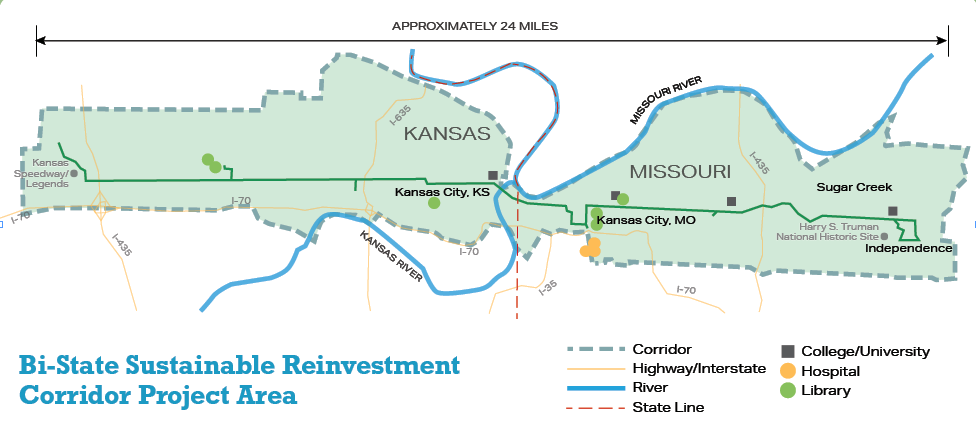
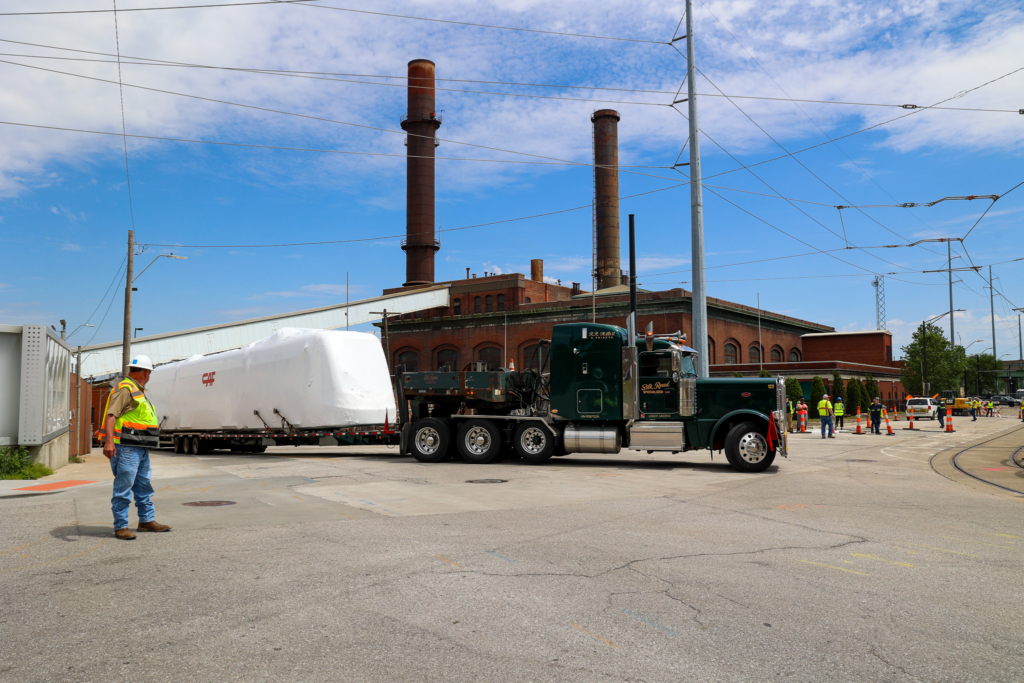
Image credit: City of Kansas City, Missouri
The second of eight shiny new streetcars arrived in Kansas City on April 30 as construction of the Main Street Extension inches closer to completion.
KCRTA sponsored the elections that created the larger Transportation Development District that is providing the local funding to match federal grants, which are covering the cost of the new vehicles. Once operational, the voter-approved TDD will support 100% of operating costs.
KCRTA is using funds reimbursed to us for the formation costs to further our regional funding strategy. This multi-county strategy could provide additional funding for more streetcar and MAX lines on both sides of the state line.
If you’re interested in sponsoring our work or joining as a member, click here.
The latest “Economic Impact of Missouri Transit” study from the Missouri Public Transit Association is out and confirms that public transit in the state generated $4 billion annually.
Highlights: